


AI support agents vs help desk SaaS
 Jan-Erik Asplund
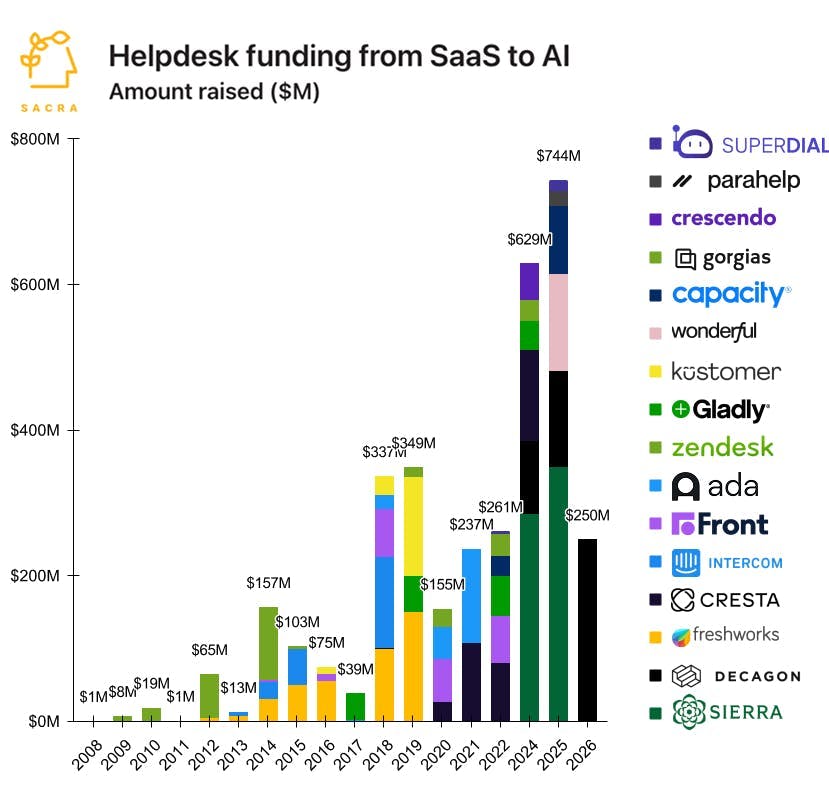
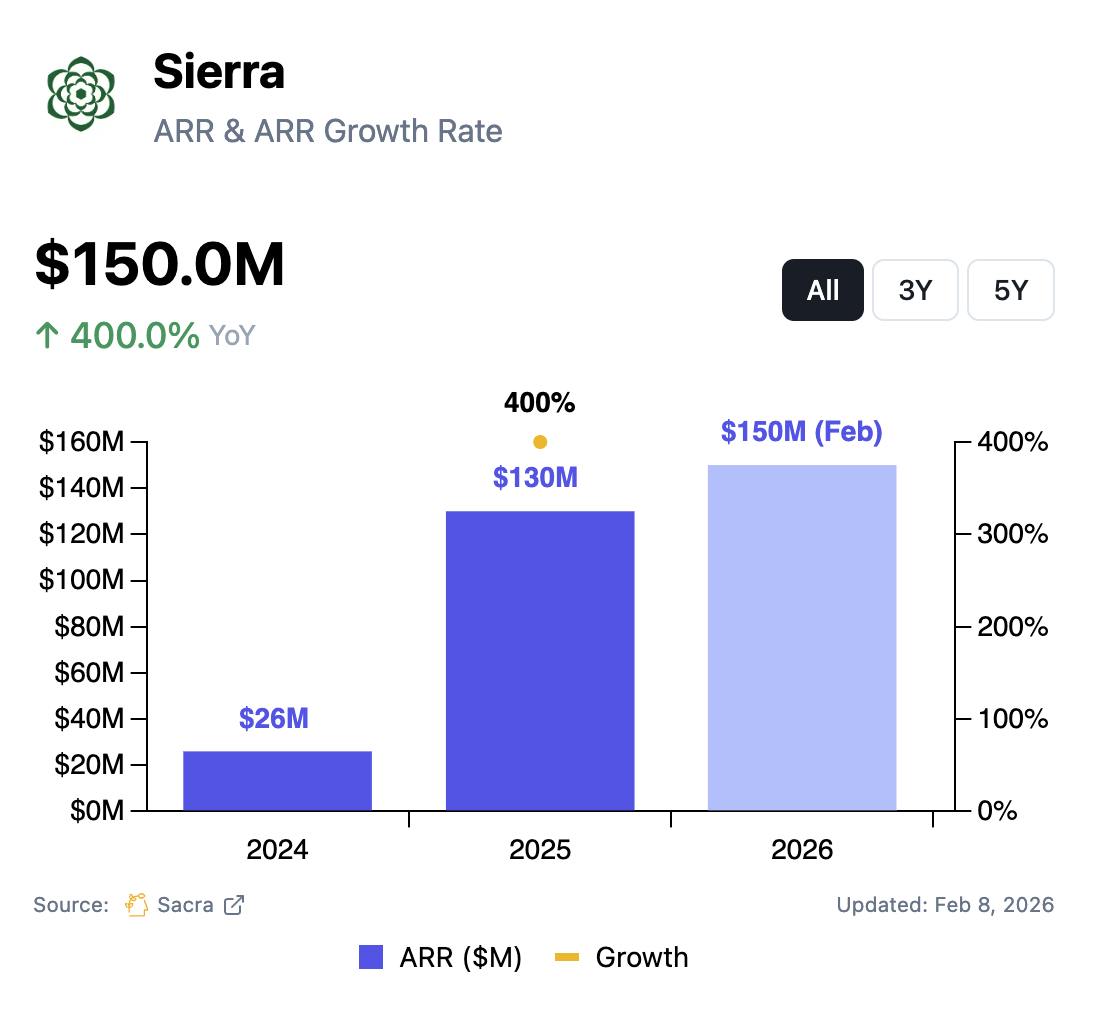
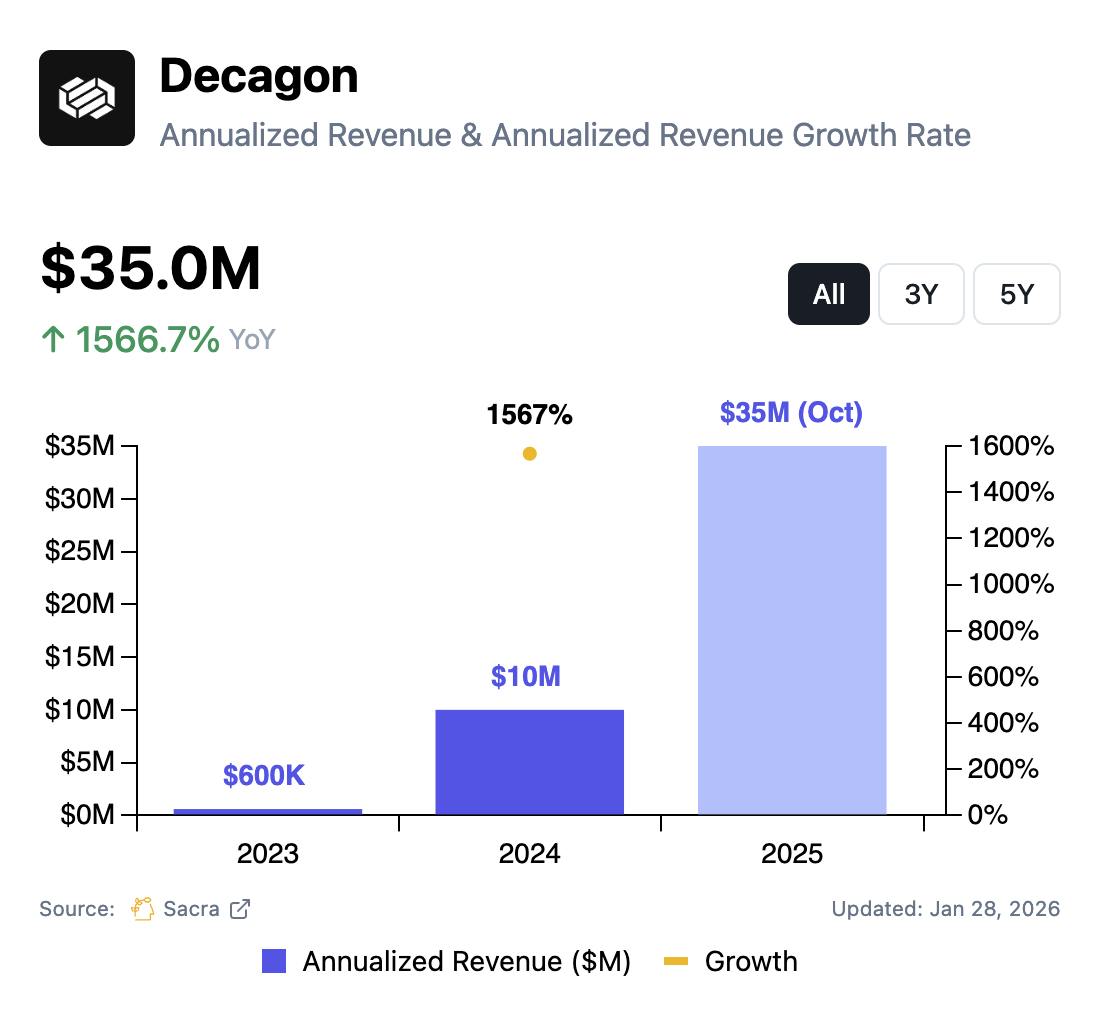
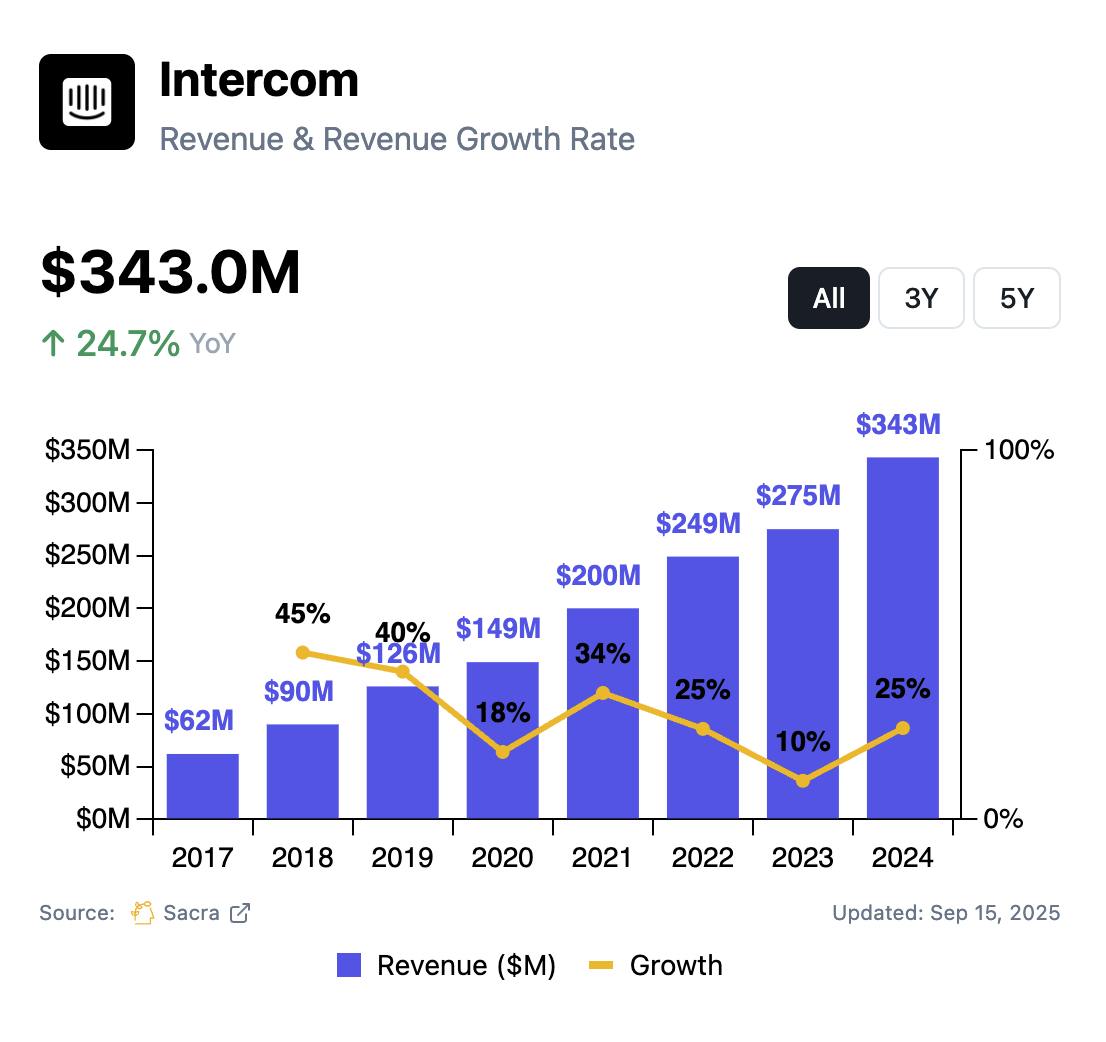
TL;DR: As LLM-powered chatbots crossed the threshold of outperforming human agents on both cost (~$1.50/resolution vs ~$15 for humans) and quality (CSAT scores exceeding human benchmarks), AI support agents like Intercom’s Fin, Sierra ($150M ARR growing 400% YoY) and Decagon ($35M ARR growing ~300% YoY) have emerged to replace frustrating phone trees & offshore BPOs. $1.5B+ in venture capital has poured into the space to fund fast followers creating intense competition in the AI agent layer and coopetition with the underlying system of record. For more, check out our full reports on Sierra (dataset), Decagon (dataset), and Intercom (dataset).
Key points via Sacra AI:
- Customer service chatbots have evolved through three generations: (1) phone-tree conditional logic that forced customers into rigid categories ("Press 1 for sales, 2 for support"), (2) intent-based bots that used fuzzy matching to route questions to pre-written answers but required extensive manual programming to hit ~50% resolution rates, and (3) LLM-powered bots like Intercom’s Fin (launched March 2023), Sierra (February 2024) and Decagon (June 2024) that crossed the threshold where AI could handle open-ended conversation. The first two generations of chatbots required significant investment to create & maintain hard-coded rules, whereas third generation chatbots flip the economics by ingesting a customer’s existing support docs, using LLMs to interpret questions, provide answers and autonomously resolve ~80% of queries and immediately deliver ROI from the jump
- Ground zero from the shift in SaaS from per-seat pricing ($50-150/seat/month) to outcome-based pricing (~$0.99-$1.50/resolution), AI support comes out to ~10% of the cost of human agents with a representative mid-market deployment running ~$63K/year for 45,000 resolutions (~$1.40/resolution), replacing what would have cost $450K+ in human agent salaries (~$10/resolution). Third-generation bots today achieve 60-80% containment rates (conversations resolved without human intervention) at CSAT scores exceeding human benchmarks (one deployment went from 2.7/5 with human agents to 4.29/5 with AI), enabling brands to swap out existing overseas support BPOs, freeze/reduce internal support headcount and free up the best support staff to focus on retention, cancel saves & upsells, shifting support towards customer success & sales.
- With AI support agents relying on the same underlying models, differentiation has come in the form of the product experience around the AI, including agent workflow builders, agent testing & QA, integration with the existing support stack and the ability to take action in key SaaS systems—with rapid adoption driven by the white-glove, forward-deployed engineer model that takes the implementation burden off of the customer by writing custom integration code, building bespoke workflows and iterating from feature request to production in 2-4 weeks. Venture capital has poured into AI support following the strong product-market fit shown by Intercom's Fin, Sierra and Decagon, including AI-native agents Giga AI ($65M raised, Redpoint Ventures), Crescendo ($50M raised, General Catalyst), Wonderful ($134M raised, Index Ventures) and Parahelp ($21M raised, Alt Capital), verticalized support agents like SuperDial ($20M raised, SignalFire) & Infinitus ($103M raised, Kleiner Perkins) in healthcare, and 2nd-generation chatbots that evolved with LLMs like Ada ($200M raised, Spark Capital) and Netomi ($52M raised, Index Ventures).
- A coopetitive dynamic has emerged between AI support agents and traditional help desk platforms where a customer might choose to run, e.g., Decagon AI agents on top of Intercom for escalations, human agents & support docs, with the products integrating via open APIs at the same time as they compete to be closest to the customer. Ada (itself an AI chatbot company) chose the Slack-native help desk Pylon ($54M raised, A16Z) as its support platform, migrating off Zendesk, an example of how AI support agents can foster competition in the underlying help desk layer, while at the same time, incumbents like Zendesk attempt to expand their product surface area into AI support agents, with Intercom differentiating on its fully-featured, vertically-integrated AI support agent and help desk offering.
- The initial wedge of reactive inbound support via chat is expanding into outbound use cases including sales lead qualification, cold calling, collections, insurance claims follow-up, and proactive customer onboarding, with companies already deploying agents from companies like Decagon to guide new users through product setup, pitch new features, and qualify sales leads before handing off to human reps. Voice represents the largest expansion opportunity with 80% of customer-to-company interactions still happening over phone, with verticalized voice agents like SuperDial and Infinitus targeting healthcare claims automation where agents call insurance payers to navigate IVRs and extract claim status, pointing toward AI agents becoming the primary customer interface as voice capabilities mature.
For more, check out this other research from our platform:
- Sierra (dataset)
- Decagon (dataset)
- Intercom (dataset)
- Intercom's $250M/year AI bet
- Intercom at $343M/year
- Eoghan McCabe & Des Traynor, CEO and CSO of Intercom, on the AI transformation of customer service
- Decagon vs Sierra
- Sierra vs Decagon
- Front: Inside the $1.3B Startup Slackifying Email [2020]
- Front (dataset)
- Gorgias at $69M ARR
- How AI is transforming B2B SaaS
- Colin Nederkoorn, founder & CEO at Customer.io, on the CDP layer in messaging
- Klaviyo: the $665M/year HubSpot for ecommerce
- Brian Whalley, Co-Founder of Wonderment, on Klaviyo's product-market fit
Read more from
Decagon vs Sierra
Free Report
Continue Reading
Read more from
Read more from
Sierra vs Decagon
Free Report
Continue Reading
Sierra revenue, growth, and valuation
Unlocked Report
Continue Reading
Read more from


Mirakl at $218M ARR
Free Report
Continue Reading

Peec revenue, growth, and valuation
Unlocked Report
Continue Reading

