OpenEvidence vs. ChatGPT for Clinicians
 Jan-Erik Asplund
TL;DR: OpenEvidence’s growth, profitability and ambitions for expansion have attracted competition from incumbent UpToDate, adjacent physician products like Doximity & Abridge and foundation lab juggernaut OpenAI. Sacra estimates that OpenEvidence hit $300M in annualized revenue by the end of July 2026.
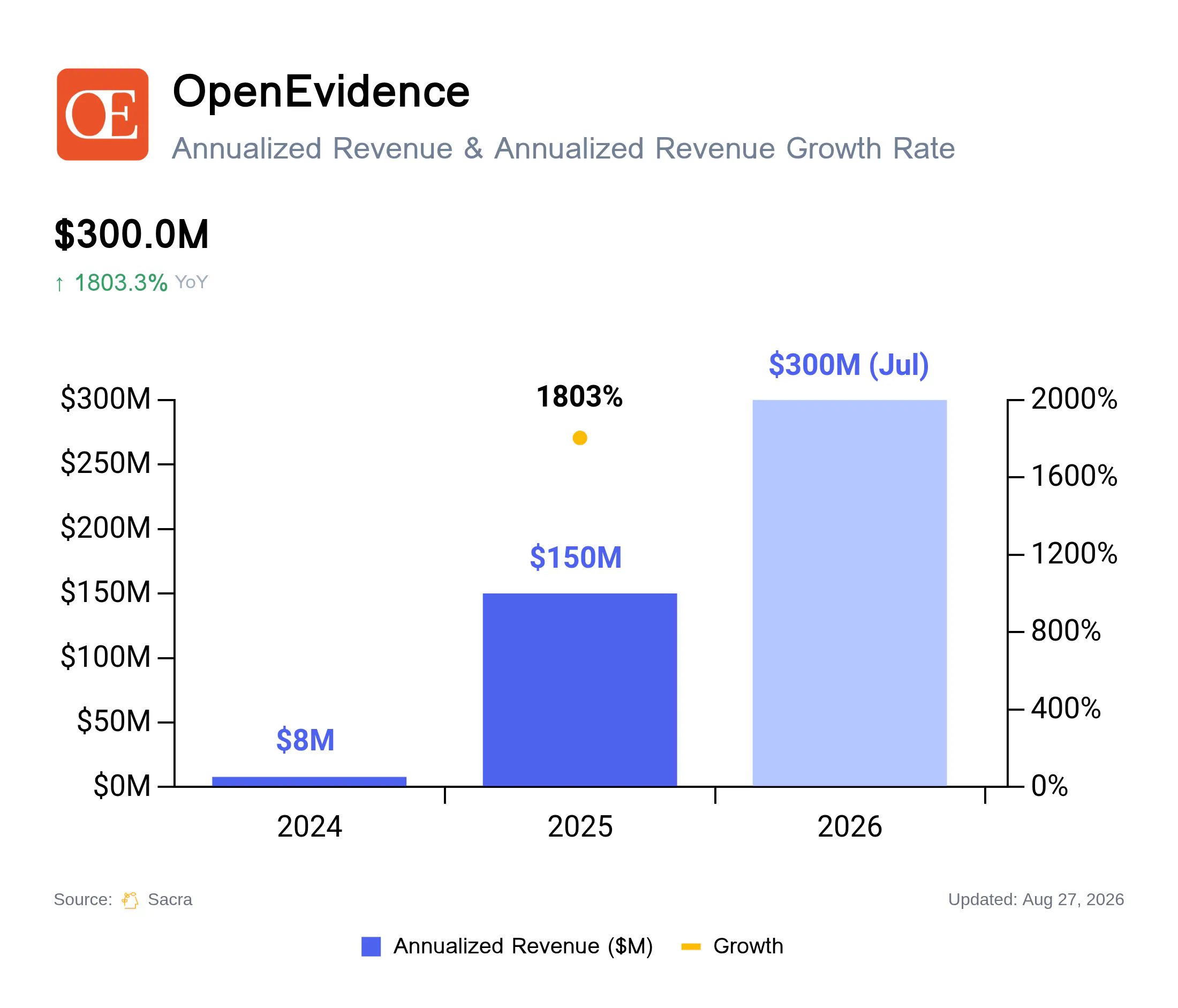
We previously covered OpenEvidence in mid-2025 as it hit $50M in annualized revenue growing 30% month-over-month (MoM). We followed up in January 2026 at $150M in annualized revenue as OpenEvidence’s dominance over clinician attention started butting it up against the LinkedIn for physicians, Doximity.
Key points via Sacra AI:
- As OpenEvidence’s free, bottom-up go-to-market has claimed 65%+ monthly active / 50%+ daily active users among U.S. physicians with CPMs for advertisers into $1,000+ four-figure territory, Sacra estimates OpenEvidence hit $300M in annualized revenue in July 2026, +1,800% YoY in 2025, valued at $12B as of its January 2026 Series D for an 80x multiple on $150M annualized revenue at the time.
- Compare to incumbent UpToDate (owned by Wolters Kluwer, EURONEXT: WKL) at approximately $690M in 2025 revenue, growing 8% YoY on 3 million+ clinicians globally with an enterprise-heavy 80% of revenue coming from institutional customers like Duke University Health System, which shipped Expert AI in October 2025 positioned as the trusted, non-ads funded clinical research solution.
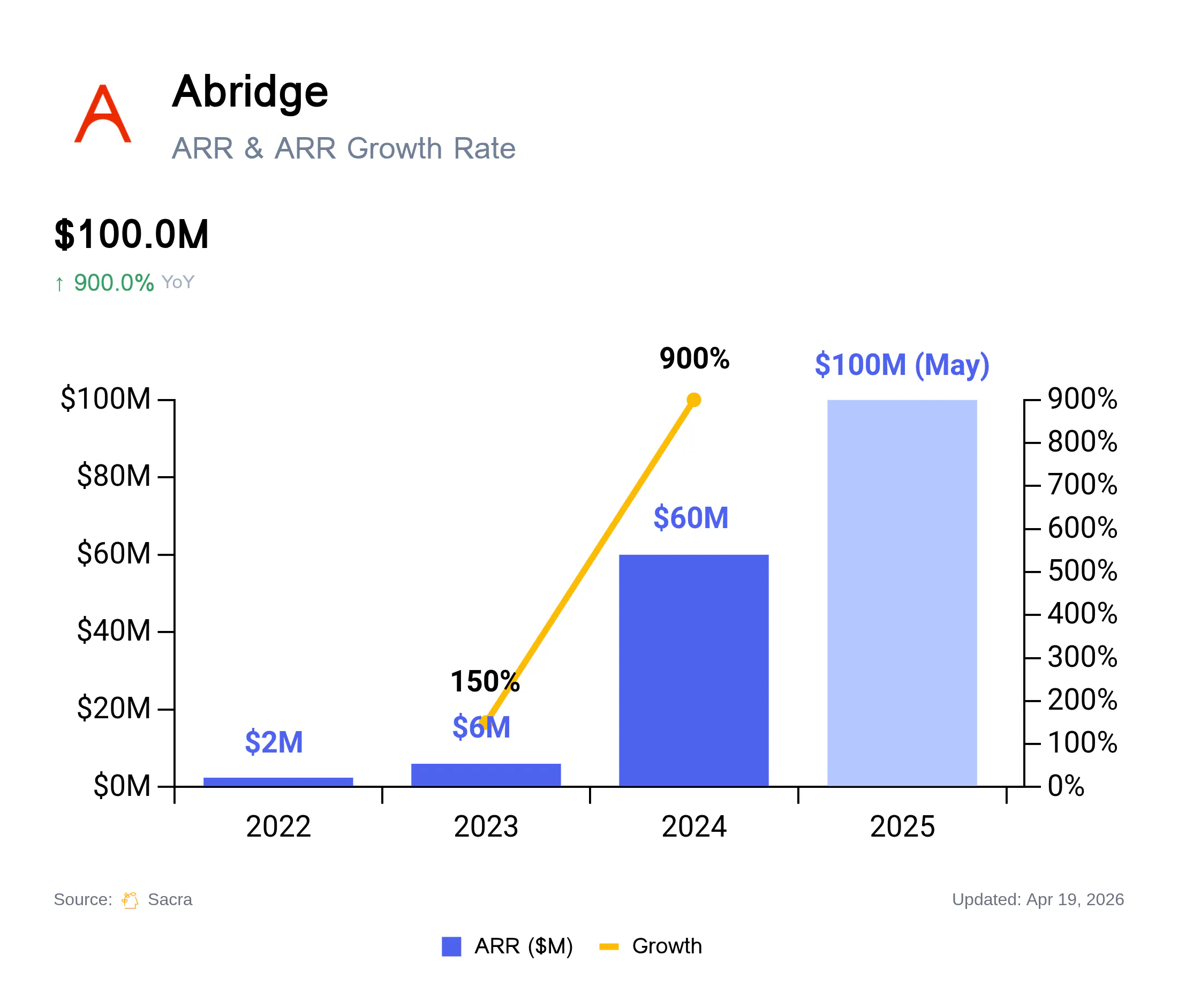
- Clinical research, AI scribes & physician networks are converging on the same all-in-one assistant for doctors, with Abridge ($100M ARR in May 2025, valued at $5.3B as of its June 2025 Series E for a roughly 53x multiple) adding NEJM & JAMA research to the patient conversations it already captures, Doximity ($645M in revenue, +13% YoY, valued at $4.7B for a 7.3x multiple) bundling search, note-taking & calling around its physician network, and OpenEvidence bundling AI note-taking, billing-code suggestions, patient calling & prescription workflows around medical search.
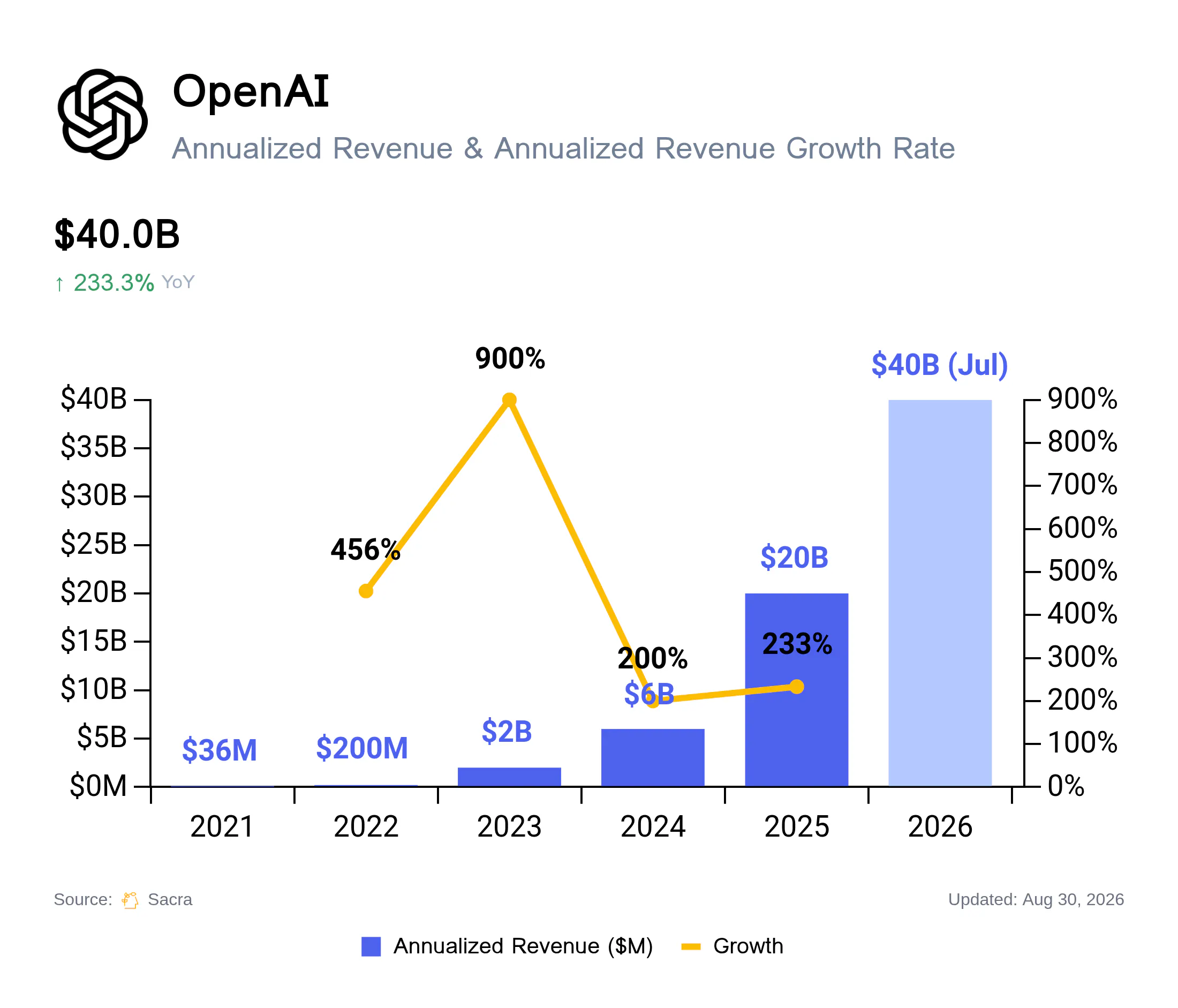
- After launching ChatGPT Health for consumers (January 2026) and ChatGPT for Healthcare for hospitals & enterprise healthcare organizations (April 2026), OpenAI launched its direct response to OpenEvidence, ChatGPT for Clinicians (April 2026), free for verified clinicians with the same bottom-up motion as OpenEvidence and ChatGPT itself, leaning into its nascent $1B annualized revenue run rate (as of August 2026) and leveraging ChatGPT’s 1 billion+ weekly active user base (as of July 2026) that includes doctors who already use it unofficially.
- At 90% gross margin, operating at break even and only selling ads against 5% of its ad space, OpenEvidence has the upside optionality to monetize harder ($6B in implied annualized revenue) and invest more into growth as the vertical, long duration player in the space.
For more, check out this other research from our platform:
Read more from
OpenEvidence vs Doximity
Free Report
Continue Reading
OpenEvidence revenue, growth, and valuation
Unlocked Report
Continue Reading