
Carta wins cap tables
 Jan-Erik Asplund
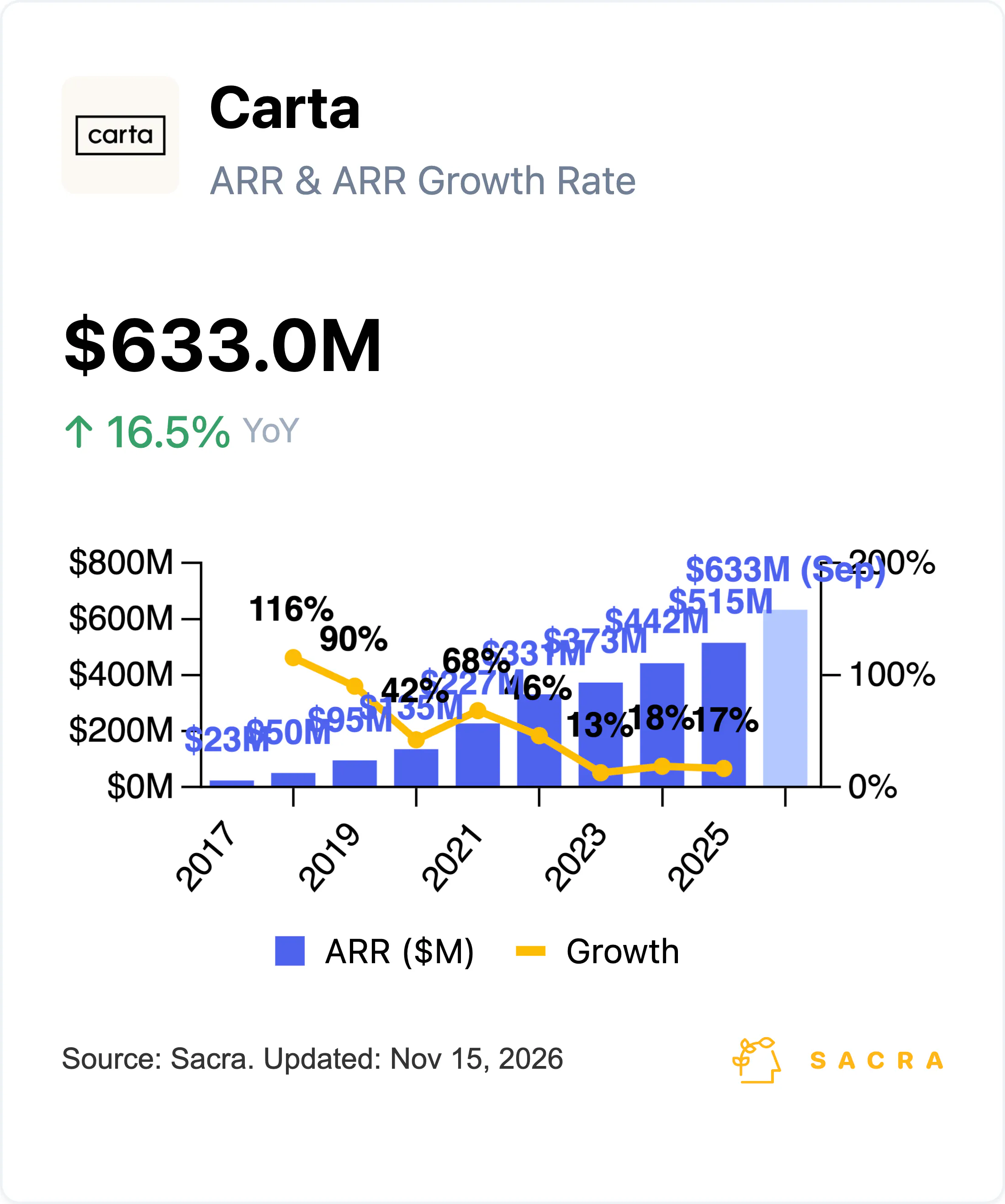
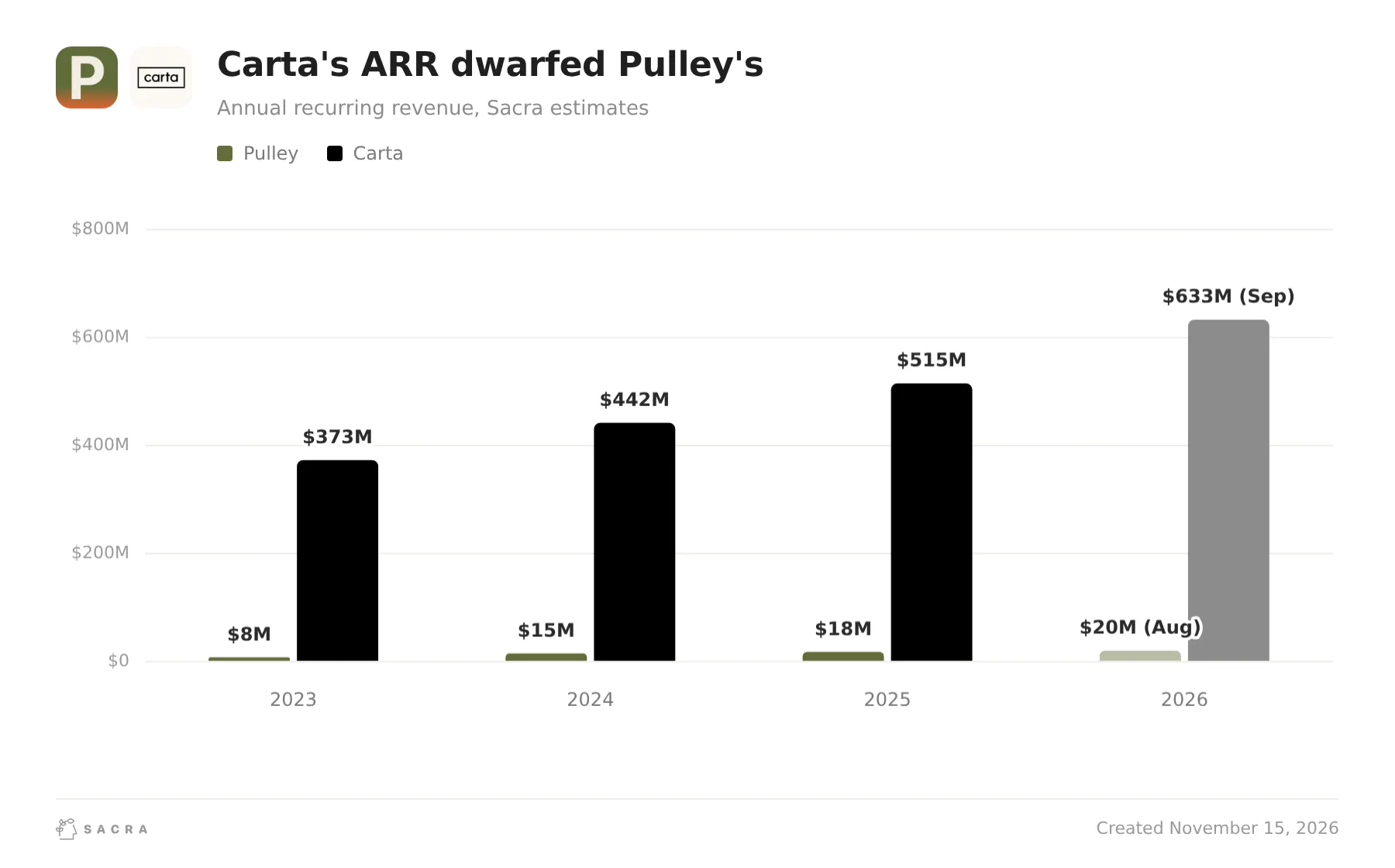
TL;DR: Carta has effectively won the startup cap-table market with the shutdown of Pulley. Now at a Sacra-estimated $633M annual recurring revenue (ARR) as of September 2026, up from $515M at the end of 2025 (+17% YoY), Carta is using its network of startups, investors & lawyers to expand into fund administration, portfolio management & AI-powered legal services. For more, check out our full Carta report and dataset.
Key points via Sacra AI:
- Circa 2010, startups tracked cap tables in Excel (or in cloud spreadsheets like Solium) with lawyers and accountants manually reconciling them against paper stock certificates and legal documents after the fact, creating an opening for Carta (then eShares) to launch as an SEC-registered transfer agent that issued electronic stock certificates through the app, automated the approval & compliance of those securities, and created a live system of record for the cap table. Carta’s 2014 launch of 409A valuations built a recurring workflow on top of the cap table updated annually in line with Carta contract renewals, turbocharging its recurring SaaS model, first with 3rd-party valuation firms and eventually by bringing 409A valuations in house and driving gross margin by automating the formerly bespoke appraisal process with software.
- As Carta went from ~3% market share of U.S. venture-backed startups to ~35% in 2020, pulling startups, VCs and lawyers & accountants into its network, Pulley (2019) launched as a direct cap-table competitor undercutting on price (first as a cloud spreadsheet and then as a transfer agent), while AngelList expanded from SPVs for investors into cap-table management for founders through AngelList Stack (September 2021). In August 2025, AngelList stopped taking new standalone cap-table customers, offered migration to J.P. Morgan Workplace Solutions (powered by Global Shares, acquired August 2022) and refocused on more productized Roll Up Vehicles (RUVs) & Consolidation Vehicles (CVs) that group investors into one cap-table entry rather than servicing the wide range of bespoke cap tables with tons of edge cases.
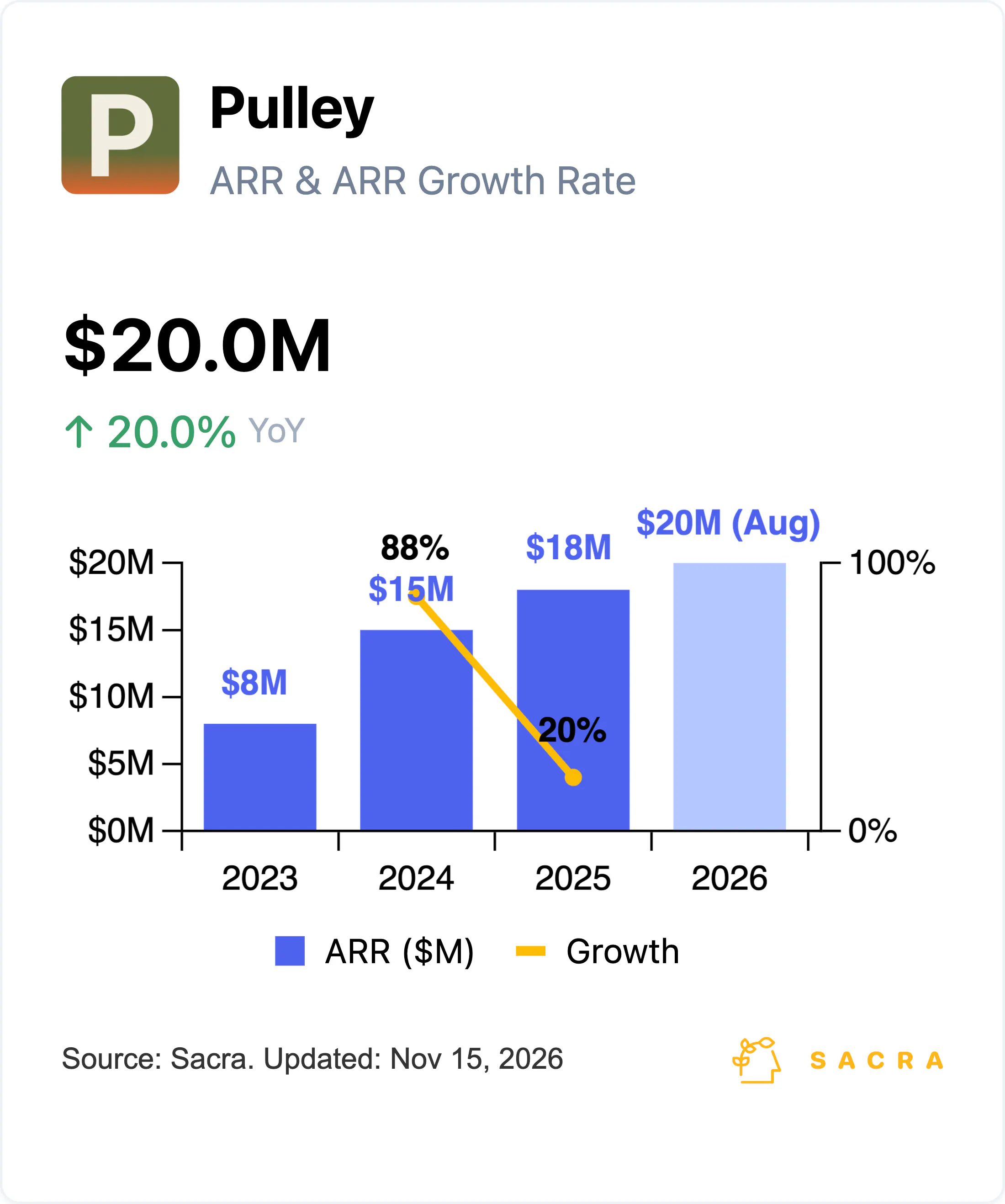
- In September 2026, Pulley announced that it would shut down and help migrate customers to Carta, at a Sacra-estimated $20M ARR as of August 2026, up from $18M at year-end 2025 (+20% YoY in 2025), after raising a $40M Series B in 2022 at a $250M valuation backed by Founders Fund (Keith Rabois) and a $10M Series A in 2020 led by Stripe. With distribution support from Stripe Atlas (Stripe’s incorporation service) and Y Combinator (Pulley’s seed investor), Pulley only managed penetration into early-stage cap tables where the service-oriented work (legal, banking, accounting) has gotten productized, before more complex financing terms and pressure from lawyers & investors already using Carta had startups switching to Carta by Series A.
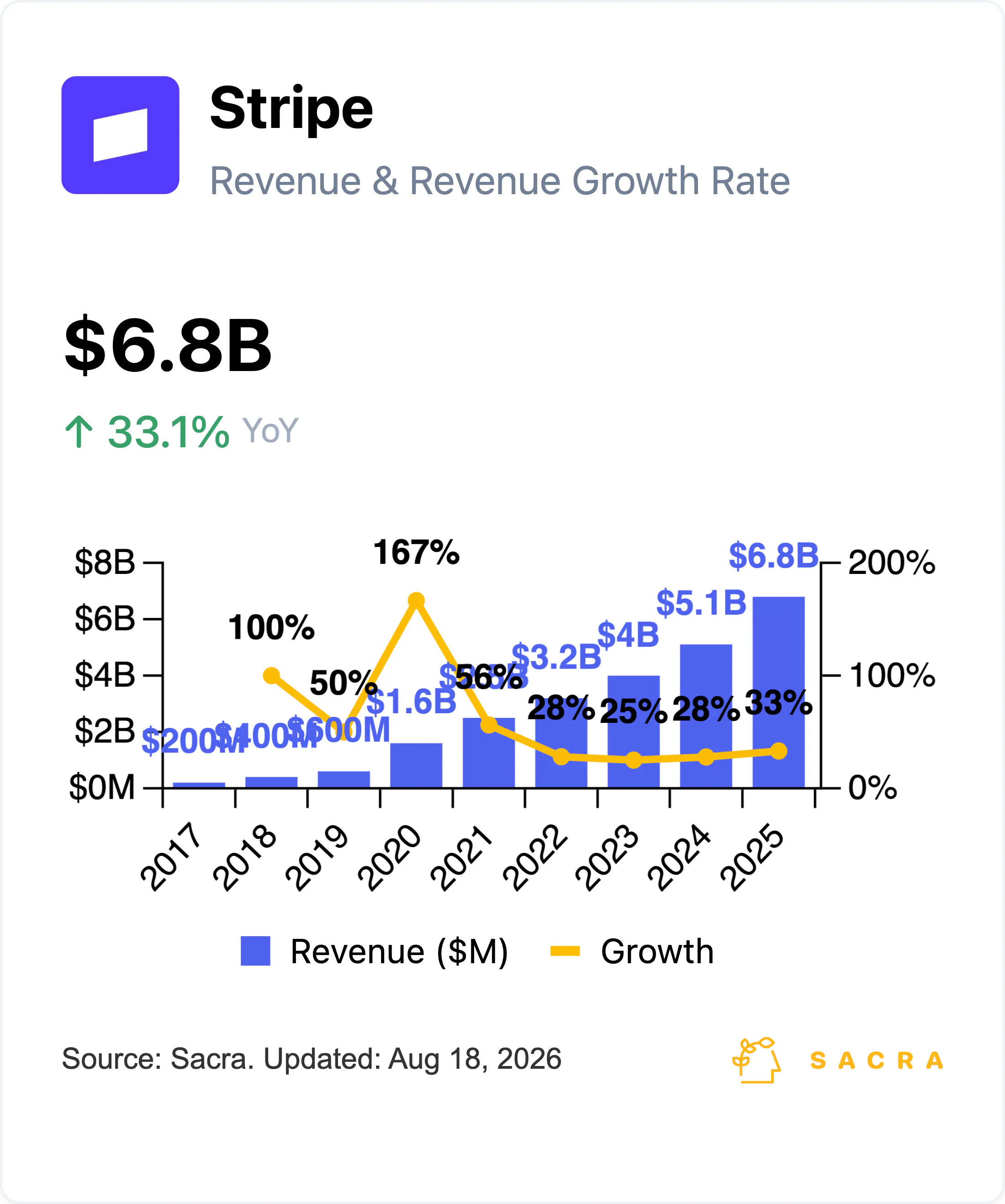
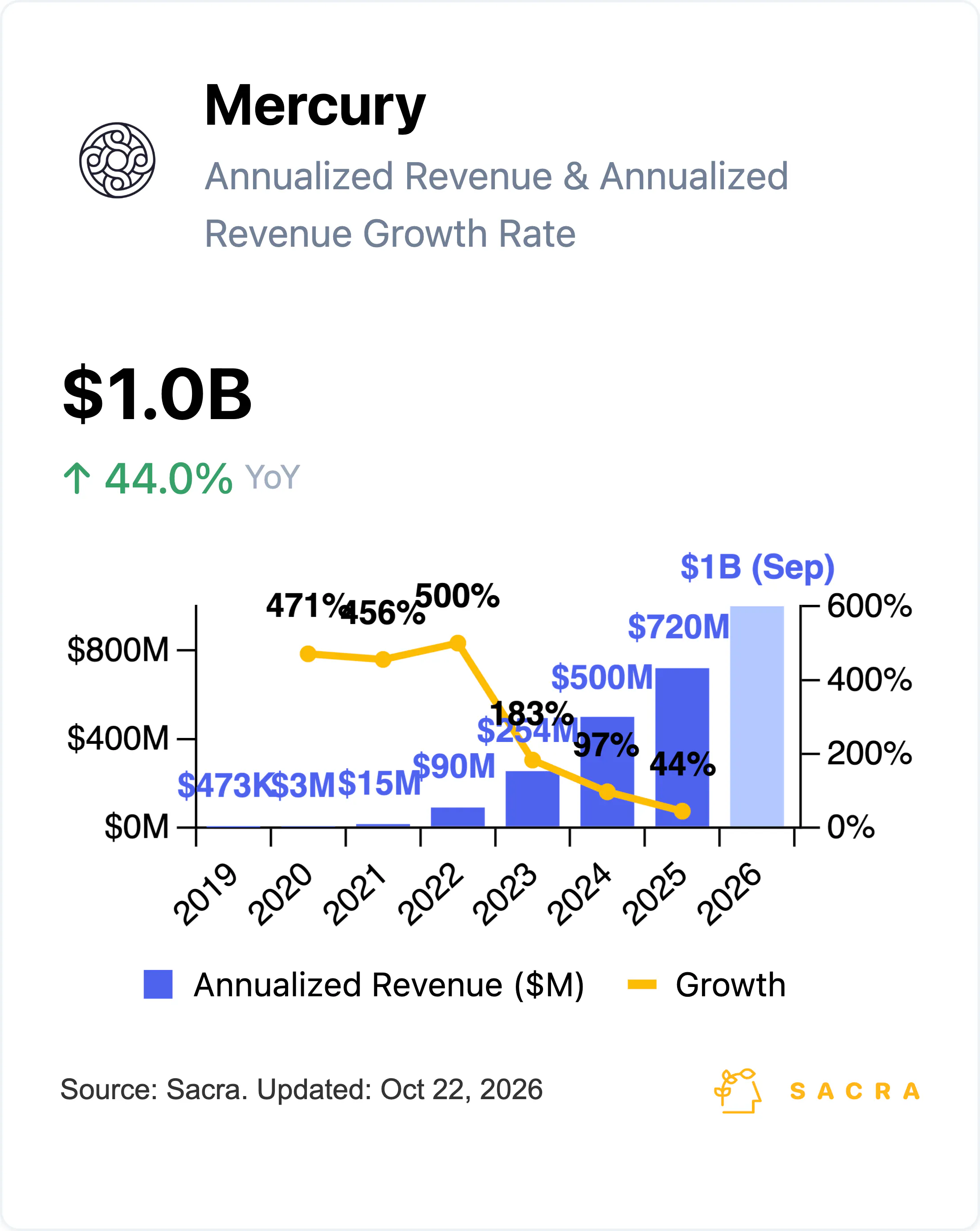
- With 85% of all U.S. unicorns onboard and its network of investors & lawyers steering new companies onto the platform their existing clients & portfolios already use, Carta has effectively won venture-backed cap tables, with Sacra estimating that Carta hit $633M ARR in September 2026, up from $515M at the end of 2025 (+17% YoY in 2025). Compare to Stripe at a Sacra-estimated $6.8B in 2025 revenue (+33% YoY), valued at $159B in February 2026 for a 23.4x multiple, and Mercury at an estimated $1B in annualized revenue in September 2026 (+44% in 2025), valued at $5.2B in May for a 5.2x multiple, with payments & banking supporting larger businesses beyond startup software subscriptions.
- The battleground has shifted to fund admin & portfolio management, where Carta Fund Admin (launched 2018) has grown into a $100M ARR business competing with AngelList & AI-native startups like Hanover Park ($27M Series A led by Emergence Capital) to bundle capital calls, distributions, portfolio tracking & LP reporting into a single platform for running an investment firm, building on a network where investors with 11–50 portfolio companies already on Carta were historically 21x more likely to buy fund admin than those with 2–10. Carta Law (launched May 2026 after acquiring Avantia Law) extends that strategy into a vertical AI law firm a la Crosby ($400M valuation, Series B led by Index and Lux Capital) focused on private capital, using AI with attorney review to handle productizable work, like venture financings and fund ops to capture professional services spend in the venture market.
For more, check out this other research from our platform:
- Carta (dataset)
- Pulley (dataset)
- AngelList
- Stripe (dataset)
- Mercury (dataset)
- Hanover Park
- Crosby
- Carta Series C Deal Memo
- Carta and the future of liquidity
- Charly Kevers, CFO at Carta, on progressive price discovery and investor relations
- Sydecar and the new atomic unit of the private markets
- Kashish Sharma, CEO of EquityList on building Carta of India
- Mercury: the unbundling of Silicon Valley Bank
- Post-Brex Ramp vs Mercury
- Alex Johnson, co-founder & CEO of Velvet, on vertical AI for venture capital
- Why Stripe bought Metronome