


Claude Code for drone warfare
 Jan-Erik Asplund
TL;DR: If aerial drones defined warfare in 2023, 2026 has been defined by the emergence of unmanned ground vehicles (UGVs). As ground robots become part of a connected software network, the future of warfare is taking shape around a shift from one soldier controlling one drone to soldiers managing fleets of drones, similar to how software engineers have become managers of AI agents. For more, check out our full report and dataset on Ratel.
Key points via Sacra AI:
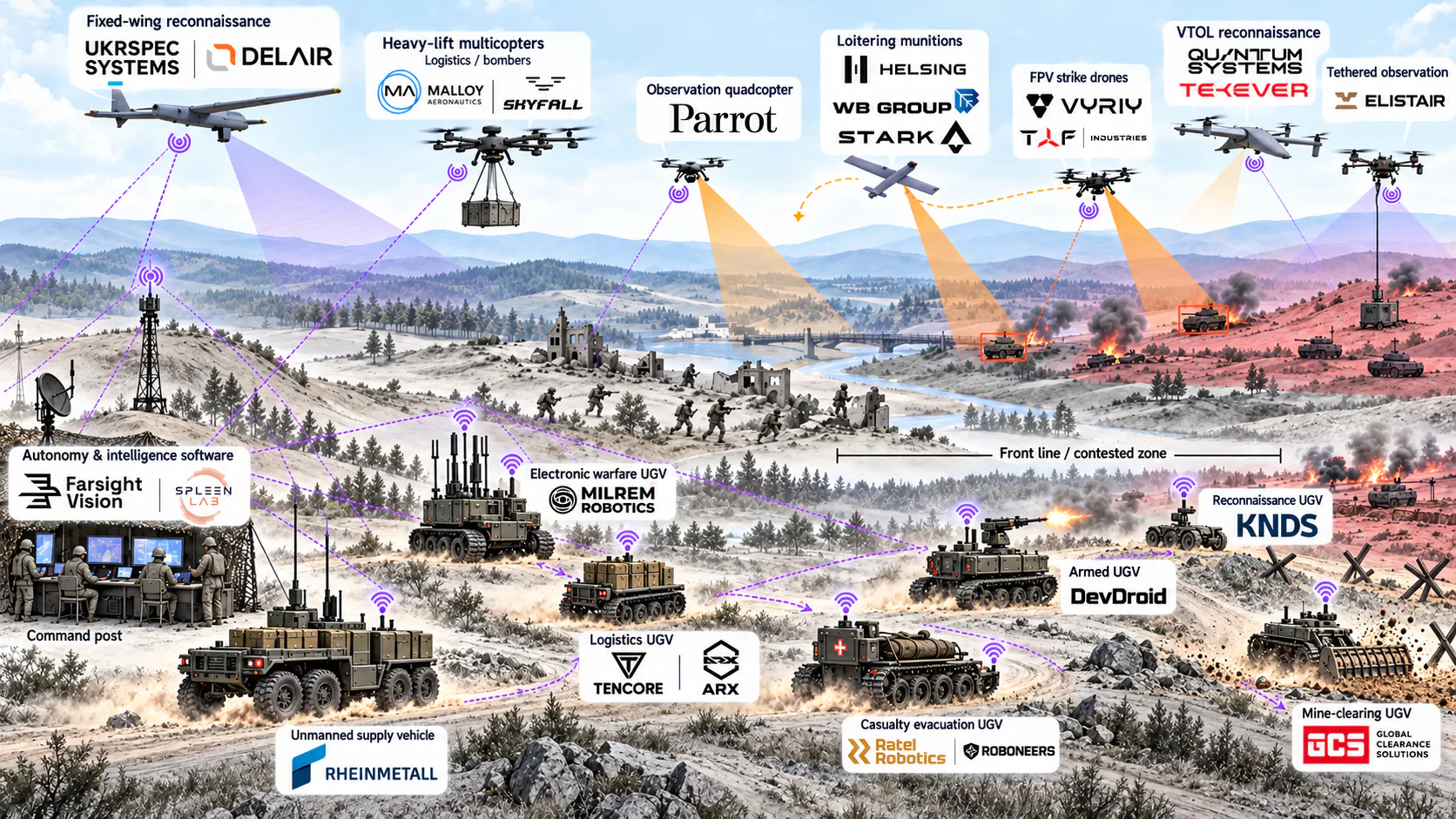
- Unmanned ground vehicles (UGVs) have become a core part of warfare in Ukraine because the aerial-drone revolution of 2022–2023 gave both sides the ability to surveil & strike targets hundreds of kilometers behind the front lines, turning everyday tasks at the rear like resupply, evacuation & equipment recovery into suicide missions. Whereas the 1st generation of ground-based robots used in Iraq & Afghanistan cost ~$100K each, had to be tele-operated from a short distance & were used mainly for IED disposal, the ground drones emerging in Ukraine today cost $10K to 20K each, can be controlled by operators miles away, and are capable of completing whole supply & evacuation missions by themselves, preserving the most scarce resource in the war which is humans.
- As the market for aerial drones has grown 25x from $250M in 2022 to $6.3B in 2025, Ukraine’s UGV industry is coming up behind it, most recently growing 6x from $43M in revenue in 2024 to $252M in 2025. Today, ground drones at $252M represent just 4% of Ukraine’s total $6.5B output of drones, but they are growing fast, with Ukraine contracting for more than 22K UGVs as of July 2026, 2x its full-year 2025 in total, while monthly UGV missions grew from 7,500 in January to 25,000 in August.
- The ground-drone market in Ukraine spans four overlapping segments, currently led by logistics & mine-laying robots (Tencore, Roboneers, Ratel) at 61% of total 2025 production output, followed by one-way explosive & mine-laying robots (Spextr) at 31%, reusable armed platforms like remotely operated machine guns (DevDroid) at 6% & demining systems (RoverTech) at 3%. In 2025, logistics UGV output grew 6.7x & one-way explosive (or kamikaze) UGVs grew 10.5x while reusable armed robot platforms grew only 22%, with simpler robots finding stronger product-market fit with commanders on the ground vs. more complex, maintenance-intensive weapons platforms.
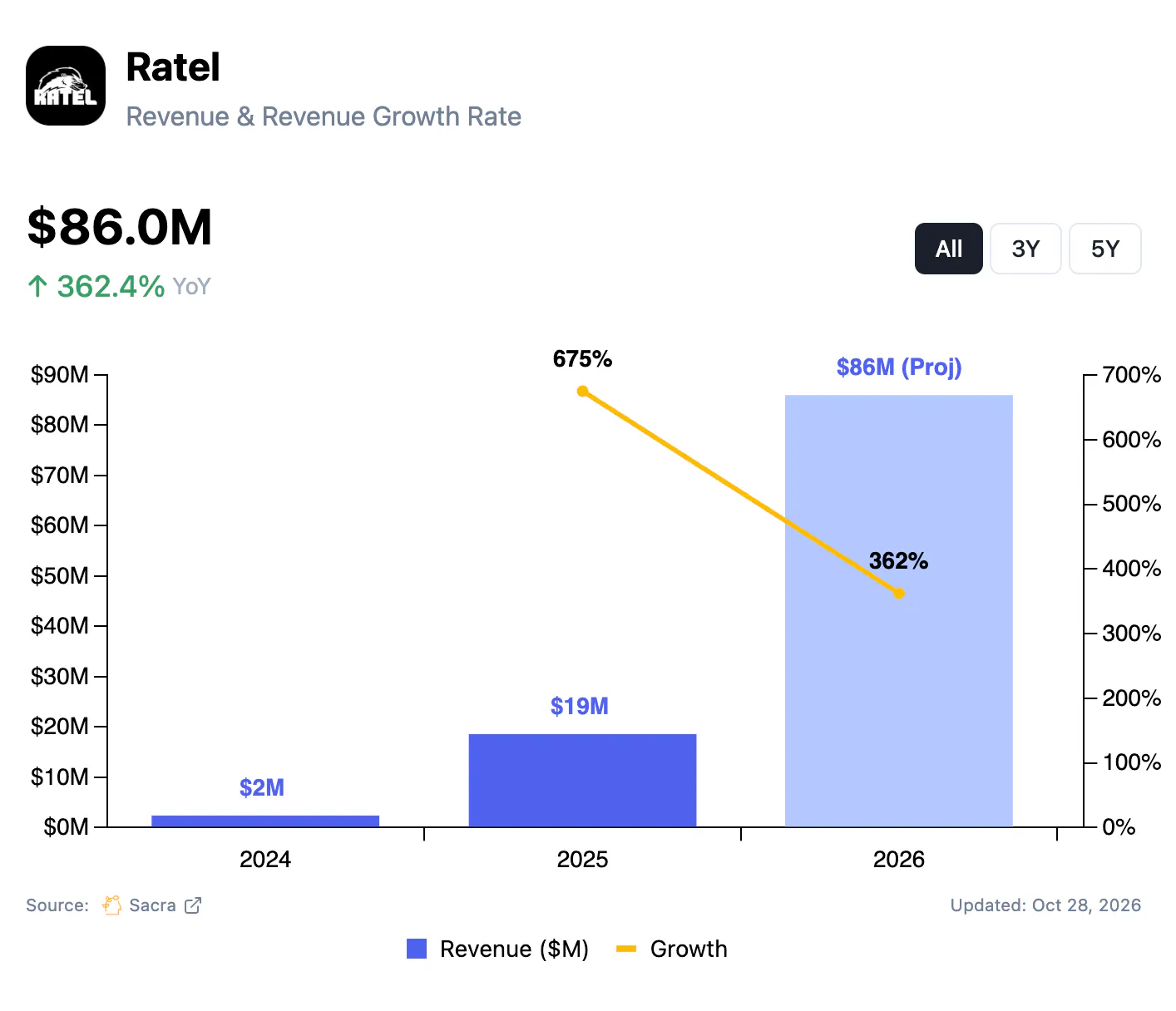
- Consolidation is coming—Ratel ($19M revenue in 2025, up 675% YoY, projected $86M in 2026), the country’s #1 UGV manufacturer by revenue spending (capturing 37% of all gov’t spend in Q1’26), agreed in September 2026 to be acquired for ~$224M (2.6x the value of its 2026 contracts) by Swarmer (NASDAQ: SWMR), the Ukrainian aerial drone software company now chaired by Blackwater founder Erik Prince. Ratel’s deal joins a broader wave including Quantum Systems’ acquisition of FERNRIDE & MITS Capital’s roll-up of four companies into MITS Industries as Western defense companies seek out battle-tested companies as they look to build all-in-one, land-and-air autonomous defense companies while manufacturers in Ukraine’s fragmented industry of 500+ drone companies seek capital to scale.
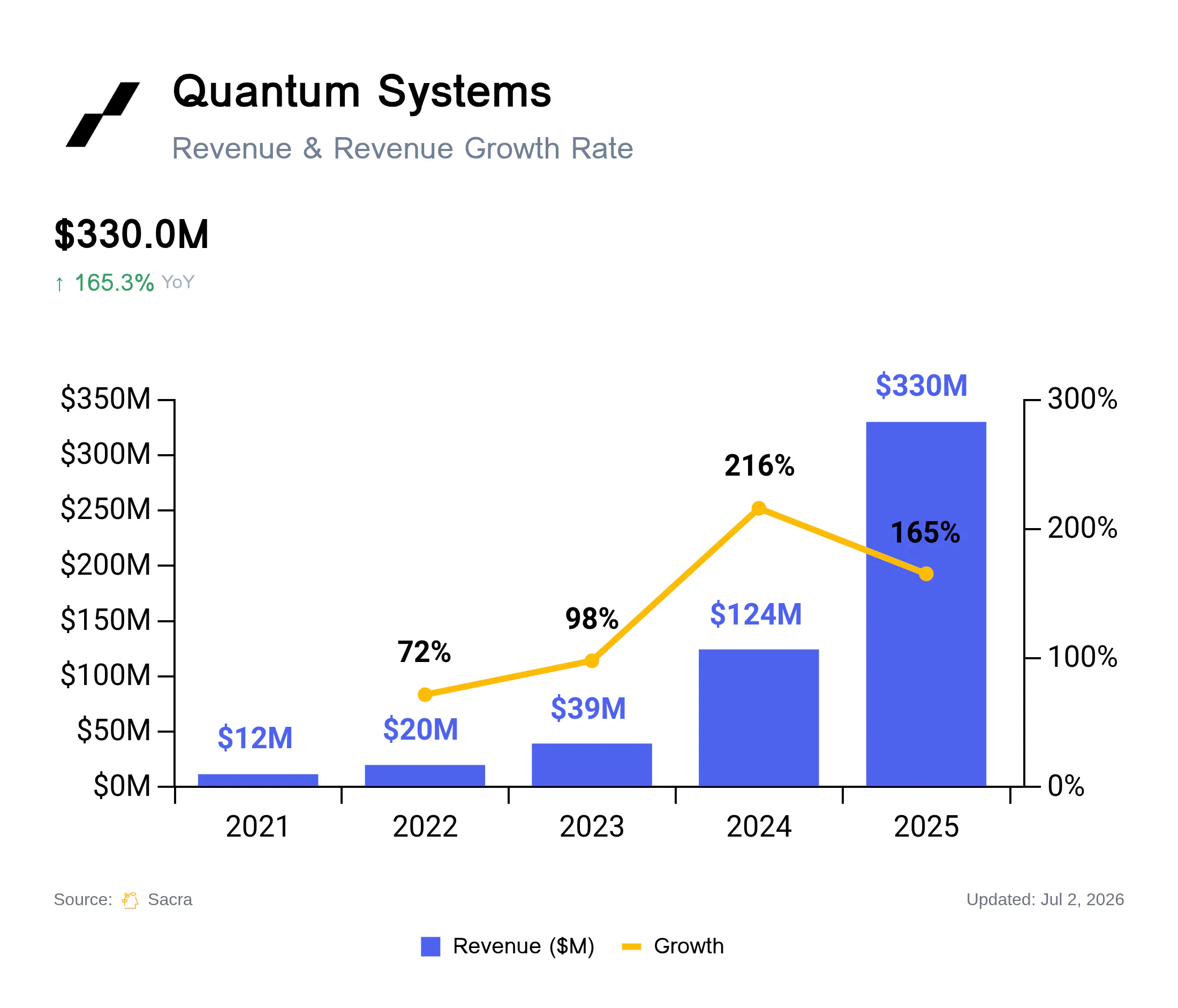
- Western defense companies like Quantum Systems (Germany) both benefit and enable Ukraine’s ground-drone output via partnerships with companies like Tencore (Ukraine) where the Western manufacturer gains experience building battlefield-tested designs & helps scale output and the Ukrainian firm can retain their IP & earn from overseas production as wartime export controls restrict finished-weapons sales abroad. With its Ukraine manufacturing partnership and its acquisition of Munich-based FERNRIDE (autonomous mobility), Quantum Systems now covers air, ground, and sea as it positions it to compete with Germany’s Rheinmetall as an all-in-one European neo-prime.
- Because cheap aerial drones pose an asymmetric threat to multimillion dollar vehicles & highly trained crews, the U.S military is investing in ground robots from companies like Forterra ($541M raised, SoftBank) & Overland AI ($142M raised, 8VC) that can launch missiles, take out enemy aerial drones, and escort existing ground armor like tanks. Companies like Overland AI target a rough cost of 5–10% of a tank’s price ($500K-$1M) to make robotic escort drones economical, while at the other end of the market, companies like Swarmbotics are pushing manufacturing costs down (~$50K) to enable swarms of smaller, more expendable robots that can scout & carry sensors into dangerous areas.
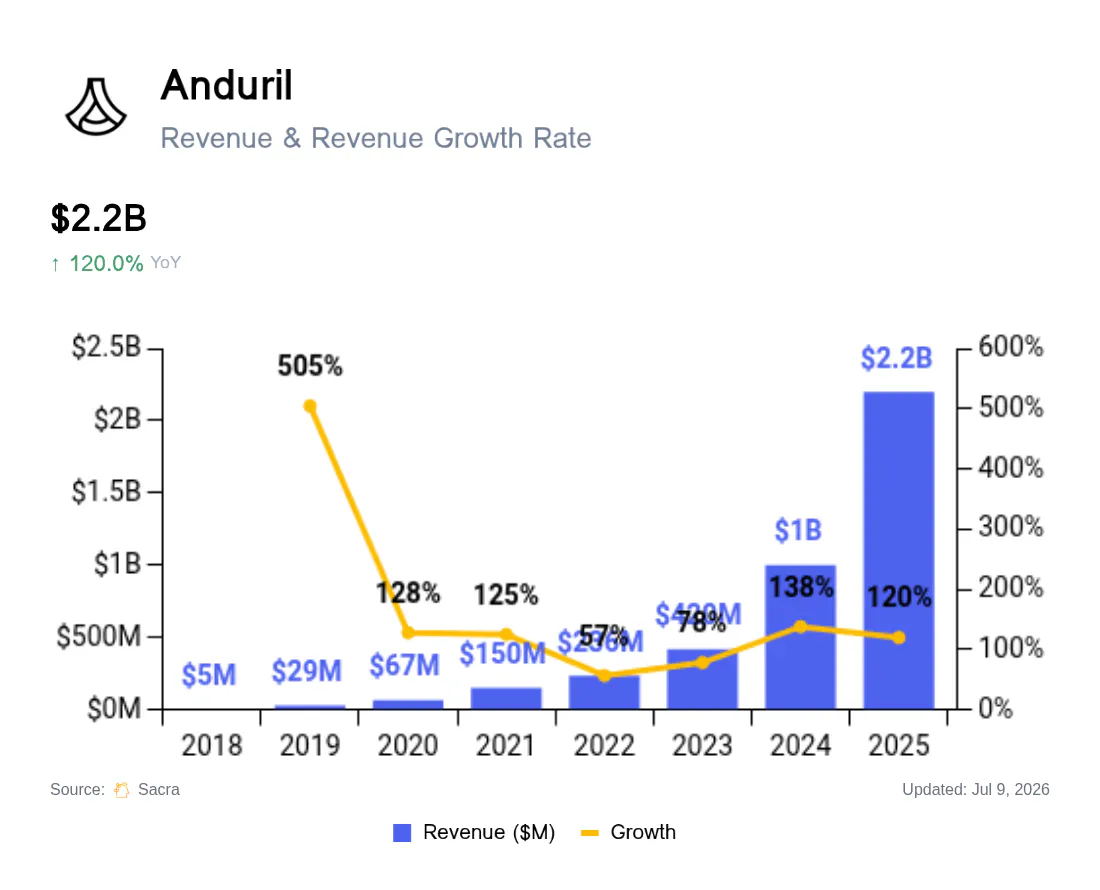
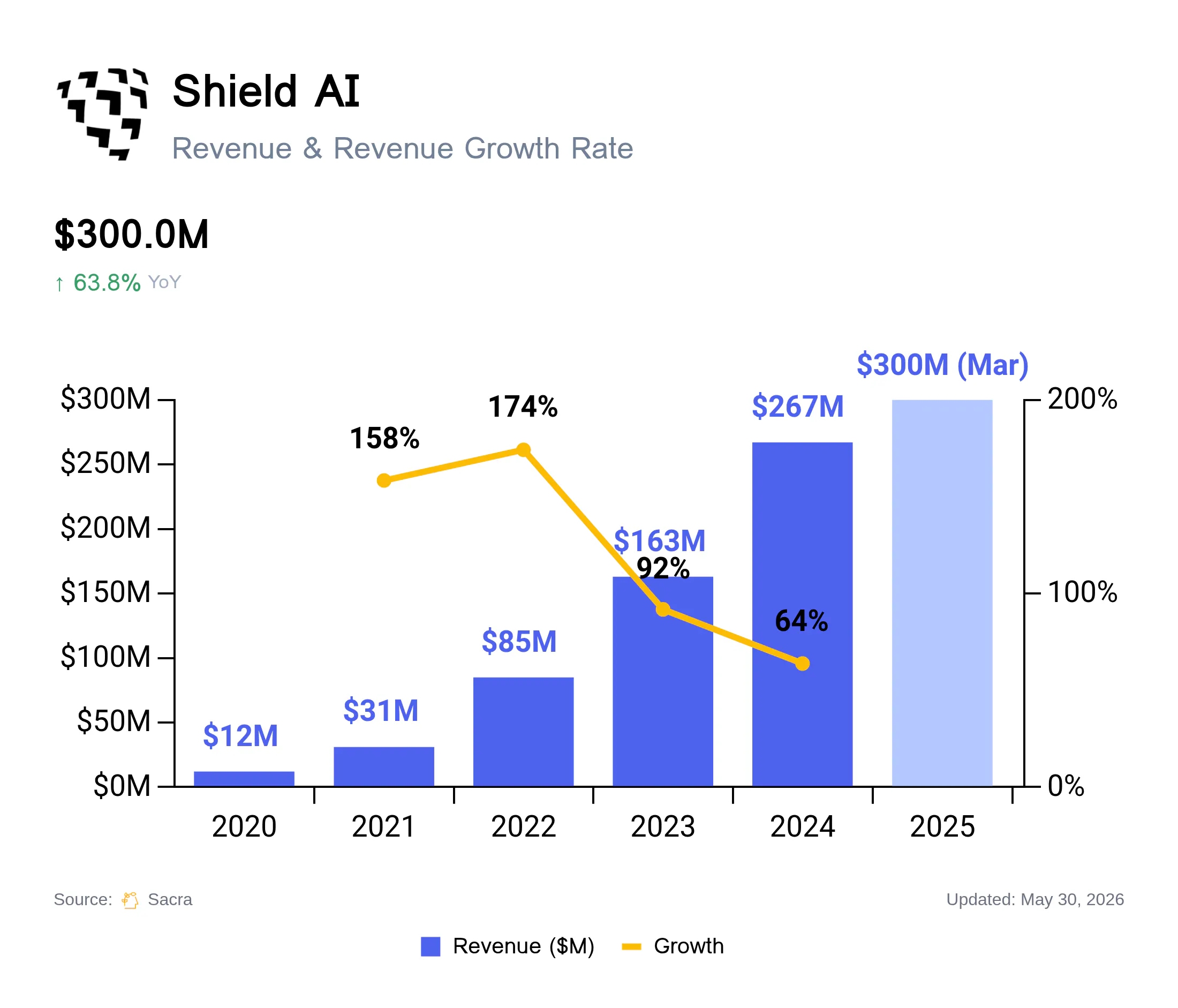
- After funding a remote-controlled firefighting tank (2017) and unsuccessfully bidding with Forterra to build a robotic supply vehicle for the army (2024), Anduril is now hiring out for a senior director of Ground Maneuver to lead a team developing ground-based robots with surveillance & attack capabilities, with Lattice integration to coordinate with aerial drones, other vehicles, and infantry. The long-term vision for all of Anduril, Shield AI & Swarmer hinges on a Claude Code-like approach to warfare where rather than one soldier controlling one drone, one soldier can assign missions to 10 separate autonomous drones and then supervise execution while the machines handle navigation & coordination.
For more, check out this other research from our platform:
- Anduril (dataset)
- Ratel (dataset)
- Shield AI (dataset)
- Quantum Systems (dataset)
- Forterra
- Overland AI
- Tencore
- Swarmbotics
- Quantum Systems at $330M/year up 161% YoY
- Ukrainian Dynamism
- TAF Drones
- $216B drone navy
- Anduril at $1B/yr
- Shield AI at $267M/year growing 64% YoY
- America First vs. American Dynamism
- Scott Sanders, chief growth officer at Forterra, on the defense tech startup playbook

