$22M/year DJI of Estonia
 Jan-Erik Asplund
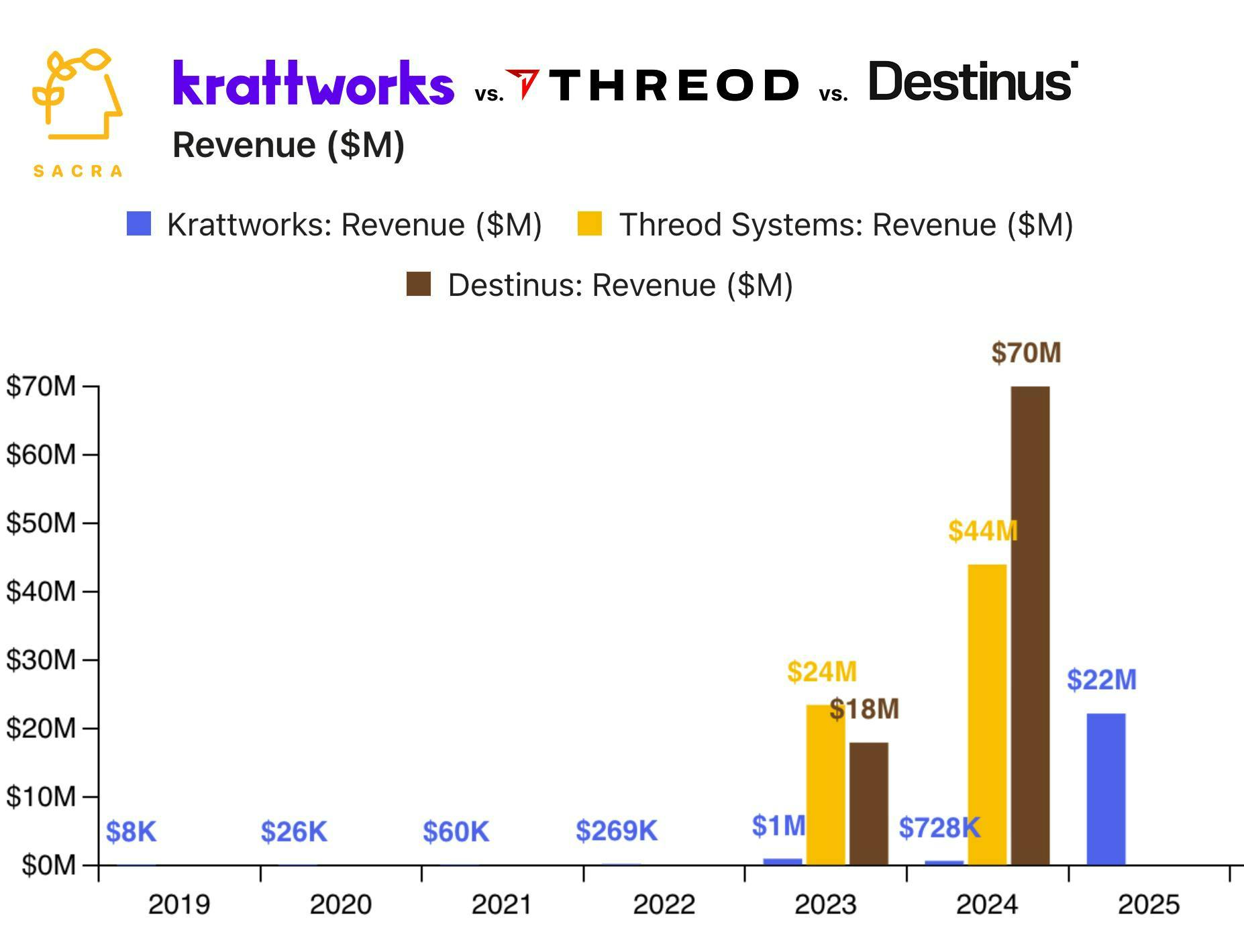
TL;DR: With drones responsible for 70% of casualties in the Russo-Ukrainian war, Estonia's KrattWorks shifted focus from firefighting drones to autonomous recon drones that can navigate home even in GPS-denied environments. Sacra estimates that KrattWorks generated $22M in revenue in 2025, up 2,953% year-over-year from $730K in 2024. For more, check out our full report and dataset on KrattWorks.
Key points via Sacra AI:
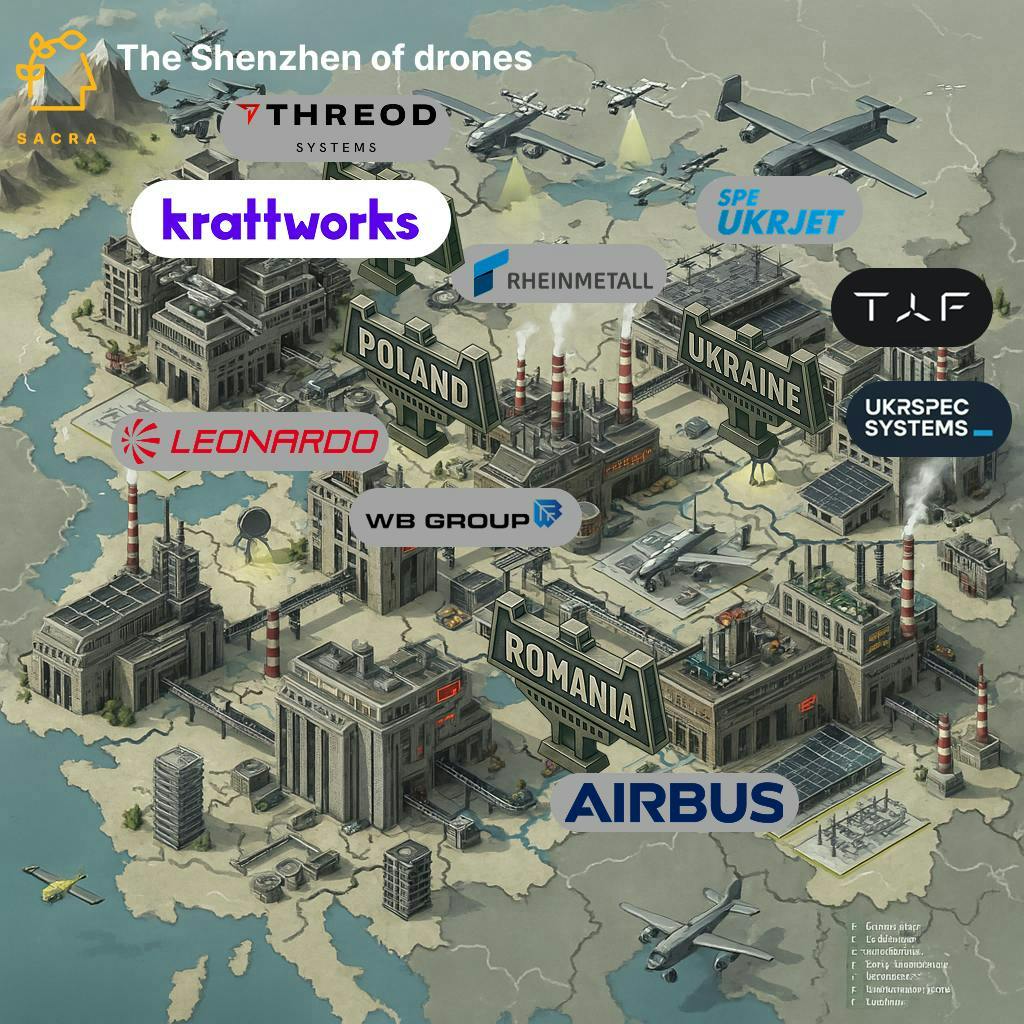
- As drones dominate the Russo-Ukrainian War (responsible for 70% of casualties on both sides), former Eastern Bloc countries have coalesced to counter Russian aggression into a “Shenzhen for drones,” a region featuring 1.8 million engineers at 40-60% of Western European labor costs, building defense companies like Estonia’s KrattWorks & Threod Systems, Poland's WB Group and Lithuania's TAF Drones. Since achieving independence from Soviet Russia in 1991, Estonia has evolved into the highest-density startup hub in Europe, building a digital-first state set in opposition to Russia’s reliance on oil & gas & giving rise to consumer companies like Skype (acquired for $8.5B in 2011), fintechs like Wise (LSE: WISE, $9B market cap), enterprise SaaS like Pipedrive (majority stake acquired by Vista at $1.5B valuation in 2020) and increasingly since the start of the Russo-Ukrainian war in 2022, defense companies.
- Mass-scale drone warfare has given rise to counter-drone electronic warfare where GPS denial bubbles hundreds of kilometers wide cause commercial drones to drift uncontrollably and crash—inspiring KrattWorks (founded in 2018 as a rescue drone company) to build tactical drones with on-board machine vision to allow its aircraft to get home even when GPS & radio links are severed. Like American defense companies Anduril & Shield AI, KrattWorks primarily monetizes through fixed-price defense contracts, anchored by a €15M seven-year framework agreement with the Estonian Centre for Defence Investments for aerial target drones (Dart series) while selling its flagship Ghost Dragon ISR platform (~€15-25K per system) to NATO allies seeking combat-proven alternatives to Chinese DJI drones now banned from Western militaries.
- As NATO's eastern flank has scrambled to build domestic drone capacity, with Ukrainian forces losing 10,000+ drones per month to Russian countermeasures, Sacra estimates that KrattWorks generated $22m in revenue in 2025, up 2,953% year-over-year from $730K in 2024, selling drones both domestically to Estonia and to Ukraine as an EU-homegrown defense company with proximity to the battlefield. Compare to Estonian drone peer Threod Systems at $44M in 2024 revenue, up 87% YoY, German eVTOL drone maker Quantum Systems at $124M in 2024 revenue, up 216% YoY, Swiss-founded autonomous drone company Destinus at $70M in 2024 revenue, up 280% YoY, and U.S. defense-autonomy leaders Shield AI at $267M in 2024, up 64% YoY & Anduril at $1B in 2024, up 138% YoY.
For more, check out this other research from our platform:
- KrattWorks (dataset)
- Ukrainian Dynamism
- TAF Drones (dataset)
- Threod Systems (dataset)
- WB Group (dataset)
- Shield AI (dataset)
- Scott Sanders, Chief Growth Officer at Forterra, on autonomy for every vehicle
- Saildrone (dataset)
- Saronic (dataset)
- America First vs. American Dynamism
- Anduril (dataset)
- Anduril at $1B/yr
- SpaceX (dataset)
- Anduril, SpaceX, and the American dynamism GTM playbook
- The biggest mistake defense startups make
- Ross Fubini, Managing Partner at XYZ Capital, on the defense tech opportunity
- Scott Sanders, chief growth officer at RRAI, on the defense tech startup playbook
Read more from
Read more from


$216B drone navy
Free Report
Continue Reading

Read more from

Brightflag revenue, growth, and valuation
Unlocked Report
Continue Reading