

OpenEvidence vs. ChatGPT for Clinicians
 Jan-Erik Asplund
TL;DR: OpenEvidence’s growth, gross margins and ambitions for expansion have attracted competition from incumbent UpToDate, adjacent physician products like Doximity & Abridge and foundation lab juggernaut OpenAI. Sacra estimates that OpenEvidence hit $300M in annualized revenue by the end of July 2026.
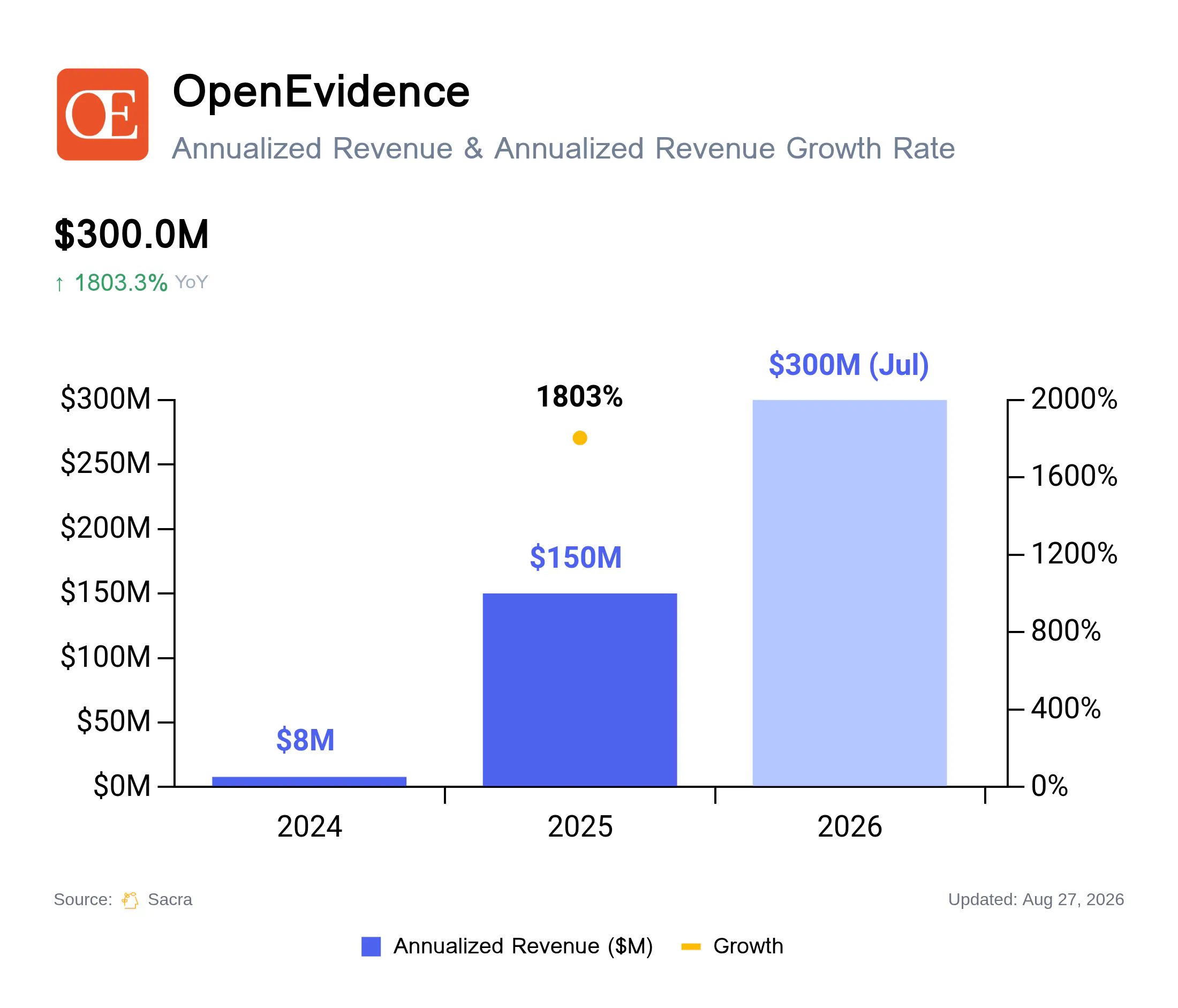
We previously covered OpenEvidence in mid-2025 as it hit $50M in annualized revenue growing 30% month-over-month (MoM). We followed up at $150M in annualized revenue by November 2025 as OpenEvidence’s dominance over clinician attention started butting it up against the LinkedIn for physicians, Doximity.
Key points via Sacra AI:
- As OpenEvidence’s free, bottom-up go-to-market has claimed 65%+ monthly active / 50%+ daily active users among U.S. physicians at 90% gross margin with CPMs for advertisers into $1,000+ four-figure territory selling ads against only 5% of its inventory, Sacra estimates OpenEvidence hit $300M in annualized revenue in July 2026, +1,800% YoY in 2025, valued at $15B as of a $250M raise in September led by Byers Capital and Andreessen Horowitz at a ~50x multiple.
- Compare OpenEvidence to clinical research incumbent UpToDate (owned by Wolters Kluwer, EURONEXT: WKL) at approximately $690M in 2025 revenue, growing 8% YoY on 3 million+ clinicians globally with an enterprise-heavy 80% of revenue coming from institutional customers like Duke University Health System, which shipped Expert AI in October 2025 positioned as the trusted, enterprise-grade, non-ads funded solution.
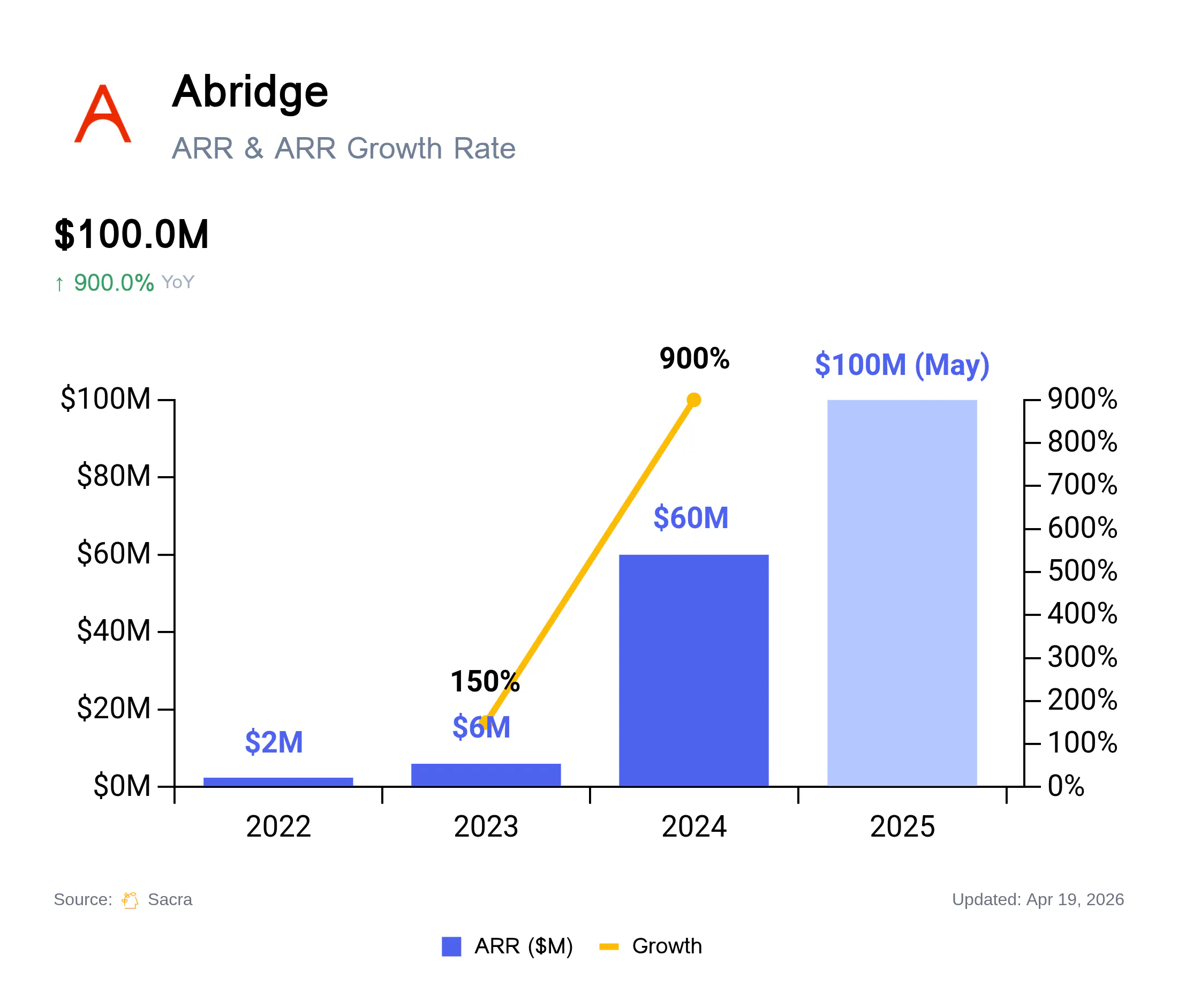
- Clinical research, AI scribes & physician networks are converging on the same all-in-one assistant for doctors, with Abridge ($100M ARR in May 2025, valued at $5.3B as of its June 2025 Series E for a roughly 53x multiple) adding NEJM & JAMA research to the patient conversations it already captures, Doximity ($645M in revenue, +13% YoY, valued at $4.7B for a 7.3x multiple) bundling search, note-taking & calling around its physician network, and OpenEvidence bundling AI note-taking, billing-code suggestions, patient calling & prescription workflows around medical search.
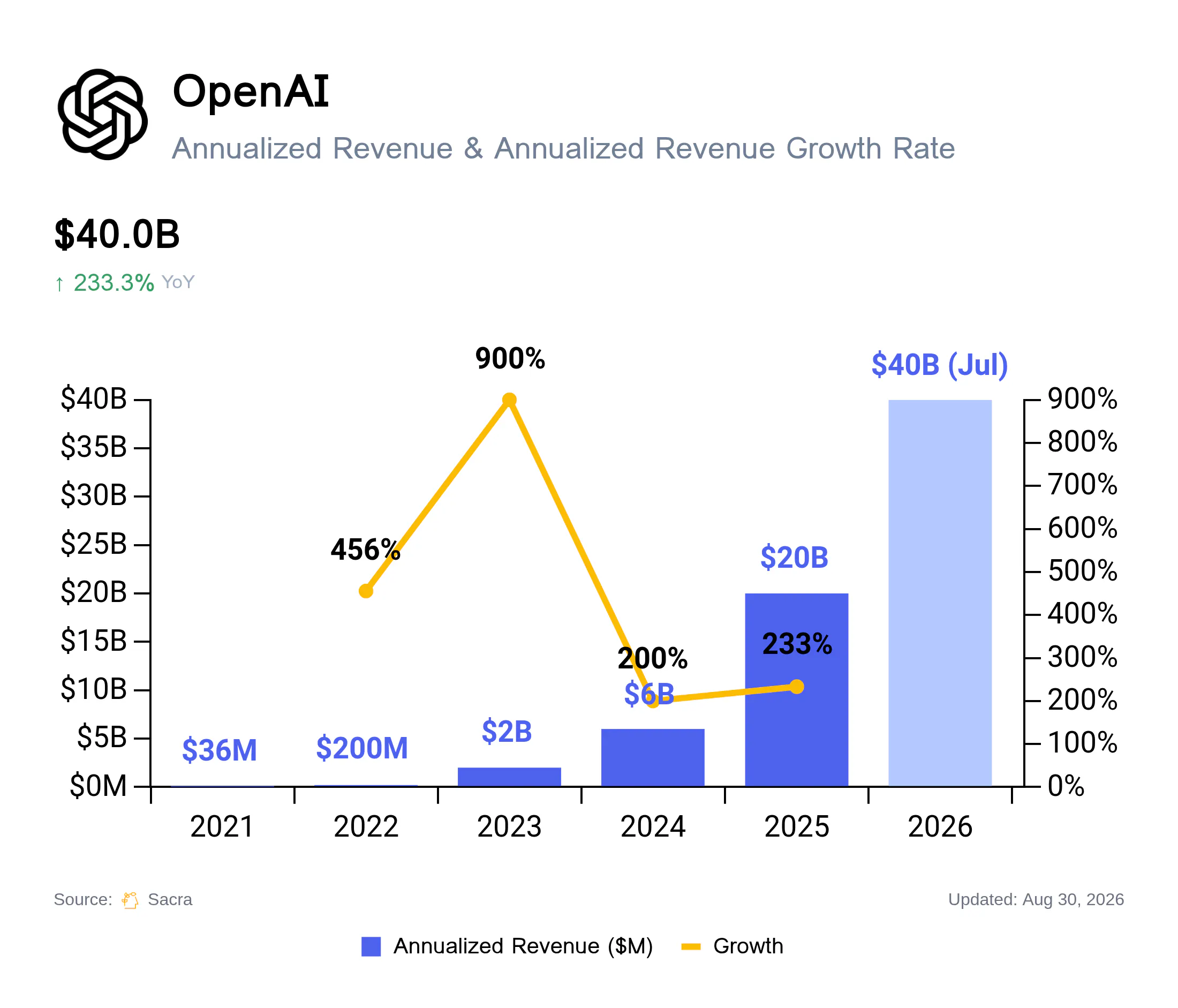
- After launching ChatGPT Health for consumers (January 2026) and ChatGPT for Healthcare for hospitals & enterprise healthcare organizations (April 2026), OpenAI launched its direct response to OpenEvidence, ChatGPT for Clinicians (April 2026), free for verified clinicians with the same bottom-up motion as OpenEvidence and ChatGPT itself, leaning into its nascent $1B annualized revenue run rate ads business (as of August 2026) and leveraging ChatGPT’s 1 billion+ weekly active user base (as of July 2026) that includes doctors who already use it unofficially.
- Starting as retrieval-augmented generation (RAG) over medical journals, OpenEvidence has significantly expanded the scope of its ambition, first with the launch of its own family of medical AI models and then with its announcement that it is developing novel therapies for rare cancers, with the long-term potential to become an AI-native Regeneron (NASDAQ: REGN, $83B market cap, $14.3B in 2025 revenue, +1% YoY) that uses its proprietary discovery platform to generate drug candidates, own economics in those drugs and have asymmetric upside beyond its ads model.
For more, check out this other research from our platform:
Read more from
OpenEvidence vs Doximity
Free Report
Continue Reading
OpenEvidence revenue, growth, and valuation
Unlocked Report
Continue Reading
Read more from

Runway revenue, growth, and valuation
Unlocked Report
Continue Reading

MiniMax revenue, growth, and valuation
Unlocked Report
Continue Reading

Kling revenue, growth, and valuation
Unlocked Report
Continue Reading